
How to Build a Loved & Avoid List for Every Client
Knowing what a client will reject before you source anything saves whole revision rounds. Here's how to build a loved and avoid list from real client reactions.

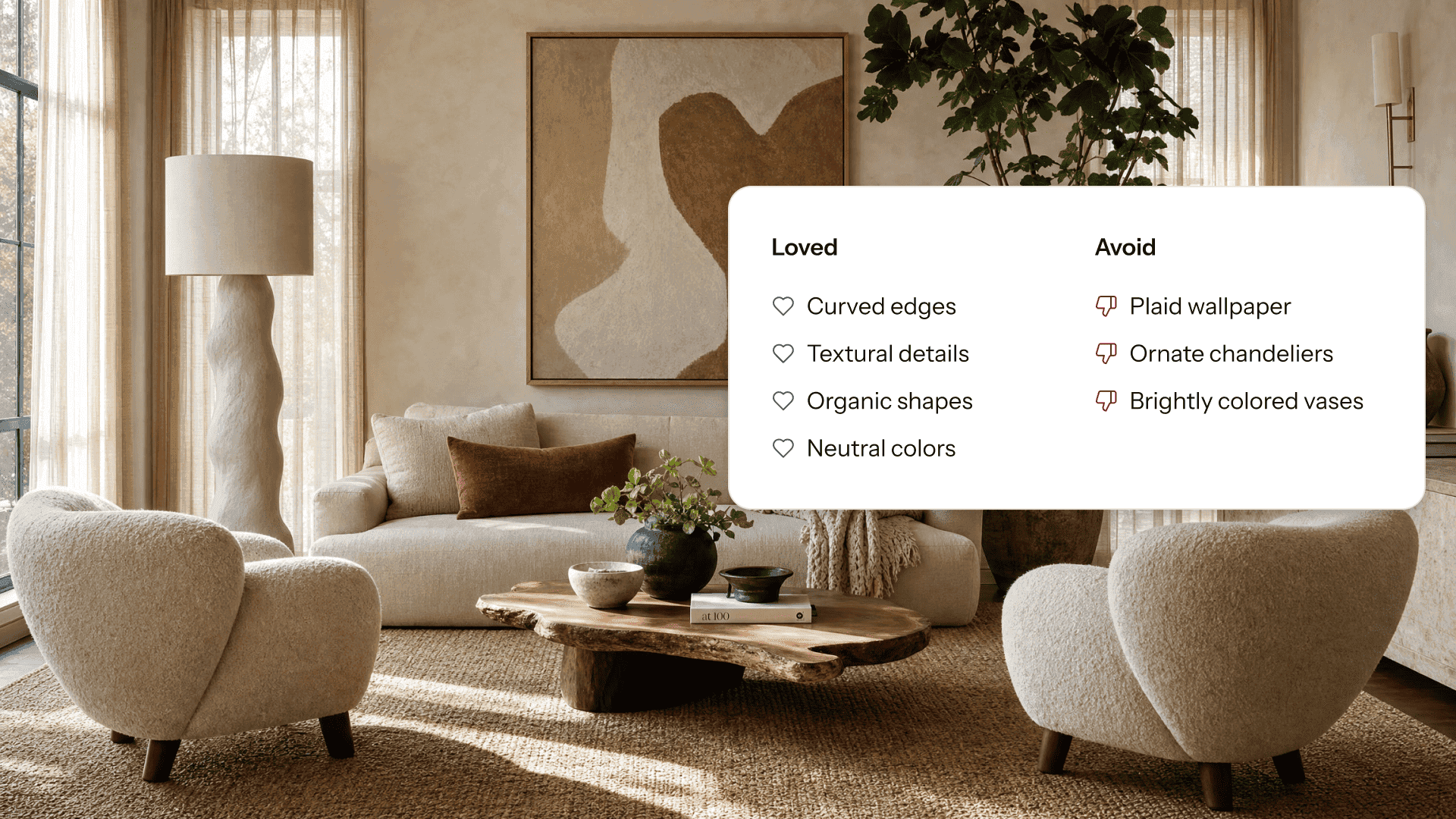
For an interior designer, a loved and avoid list is a simple, specific record of what a client is drawn to and what they would never live with, built from the client's reactions to real images rather than the words they use in an intake form. It tells you what is off the table before you source a single piece, which is where it saves the most time. The avoid side is usually the more valuable half, because knowing what to rule out prevents the revision rounds that start with "it's not quite right."
Most designers track what a client likes. Far fewer keep a deliberate record of what a client will reject, and that is the half that quietly costs you. A loved and avoid list captures both, in language specific enough to actually source from. Here is what it is, why the "avoid" side matters most, and how to build one for every project.
What is a loved and avoid list?
A loved and avoid list is a two-column record for a single client: on one side, the styles, materials, colors, and forms they respond to; on the other, the ones they react against. It is not a mood board summary or a vibe. It is a specific, decision-ready document you can hold up against any sourcing choice and know, in seconds, whether it belongs in the project.
The key detail is where it comes from. A useful loved and avoid list is built from how a client reacts to real images, not from the adjectives they picked in a questionnaire. Reactions are specific. Adjectives are not.
Why "avoid" is more valuable than "loved"
The loved side gets all the attention, but the avoid side prevents more pain.
When a client cannot tell you what they want, they usually cannot tell you what they do not want either, until they see it in your concept and recoil. That recoil is a revision. It is the "it's not quite right" that sends you back to the drawing board on a direction you thought was approved.
An avoid list moves that moment to the front of the project. Instead of discovering a client hates cool-toned woods three concepts in, you know it before you source anything. Every item on the avoid list is a revision round you will not have to run. That is why experienced designers come back to this part of a style profile more than any other: it is the most immediately useful thing you can know about a client.
How to build one, step by step
You can build a loved and avoid list on any project, with or without software. The method matters more than the tool.
1. Gather a real spectrum of images
Pull 20 to 30 images from three sources: the inspiration you have gathered for this project, your own past work, and the client's own saved images or Pinterest. You want enough range that their reactions actually separate signal from noise. If every image is in the same style, you learn nothing.
2. Capture reactions, not just ratings
A thumbs up is a start, but you want specificity. For each image, note what the client responded to and what they recoiled from. Ideally let them tag the exact element, because a client who "loves" an image often loves one thing in it (the light, the rug, the built-ins) and is neutral on the rest. The element is the signal, not the whole image.
3. Sort into loved, avoid, and "it depends"
Group the reactions. Loved and avoid are obvious. The third bucket matters too: things that landed differently depending on context, like a color they liked in a bedroom but rejected in a kitchen. Those nuances are exactly what prevents misfires later.
4. Look for the contradictions
Every client has them. They love warm minimalism in one image and a maximalist gallery wall in another. Do not flatten the contradiction, name it. Knowing a client holds two competing pulls, and which one wins in which room, is the difference between a designer who "gets it" and one who guesses.
5. Confirm it before you source
Bring the list to your kickoff and walk through it together. This does two things: it catches anything you misread, and it makes the client feel genuinely understood before you have presented a single concept. That feeling is what gets you referred later.
What to put on the list
A loved and avoid list is most useful when it is specific. Aim for entries you could actually source against:
Styles and archetypes: "warm mid-century," not just "modern"
Materials and finishes: woods, metals, stone, textiles, and the tones within each
Color: the palette they lean into, and the colors that consistently got a hard no
Forms and silhouettes: clean-lined versus ornate, low versus statement
Patterns and texture: how much visual richness reads as "alive" versus "too busy"
Per-room differences: where a preference flips depending on the space
Known contradictions: the competing pulls, and which wins where
Vague entries ("likes neutrals") are nearly useless. Specific ones ("avoids cool grays, loves warm greige and oak") make every later decision faster.
How a loved and avoid list saves revision rounds
Revision cycles rarely start with bad design. They start with a direction that was slightly wrong from the beginning, and a client who only realizes it when they see the concept. A loved and avoid list pulls that realization forward, before sourcing, before the first presentation, when changing course costs nothing.
It is not a bad client problem. It is a process problem. A specific record of what a client will and will not accept turns the most expensive part of a project, the back-and-forth, into something you have largely settled before you begin.
Generate one automatically with Glintera
Building a loved and avoid list by hand works. It also takes time, and the quality depends on how carefully you read each reaction. Glintera's Style Profiler generates one for every client as part of a complete style profile. Your client rates inspiration images through a link, no account needed, tags what they love and what they would never live with, and the profile sorts it into a loved and avoid list alongside color preferences, materials, and a per-room breakdown, each entry tied to the images they actually reacted to.
It is the same artifact, built from real reactions, ready before you source a single piece.
FAQ
What is a loved and avoid list in interior design?
It is a two-column record for a single client: the styles, materials, and colors they are drawn to, and the ones they react against. Built from how a client reacts to real images rather than from intake-form adjectives, it gives you a specific, decision-ready reference for sourcing and concept work before a project begins.
How do you know what a client will reject before you design?
By capturing their reactions to a range of real images, not just asking what they like. Show 20 to 30 spaces drawn from project inspiration, your past work, and their own saved images, and record what they recoil from. Those rejections become an avoid list, so you know what is off the table before you source anything.
Why is the "avoid" side more important than the "loved" side?
Because rejections are what trigger revisions. Clients often cannot name what they dislike until they see it in a concept, and that recoil sends you back to redesign. An avoid list surfaces those rejections at the start of the project, when changing direction costs nothing, so each item is a revision round you will not have to run.
What should a loved and avoid list include?
Be specific enough to source from: styles and archetypes, materials and finishes with their tones, the color palette and the hard-no colors, forms and silhouettes, pattern and texture tolerance, per-room differences, and any known contradictions in the client's taste. Vague entries like "likes neutrals" are far less useful than "avoids cool grays, loves warm greige and oak."
How does a loved and avoid list reduce revisions?
Most revisions come from a direction that was slightly wrong from the start, caught only when the client sees the concept. A loved and avoid list moves that moment earlier, before sourcing and before the first presentation, when correcting course is free. Settling what a client will and will not accept upfront removes much of the later back-and-forth.
{"@context":"https://schema.org","@type":"FAQPage","mainEntity":[{"@type":"Question","name":"What is a loved and avoid list in interior design?","acceptedAnswer":{"@type":"Answer","text":"It is a two-column record for a single client: the styles, materials, and colors they are drawn to, and the ones they react against. Built from how a client reacts to real images rather than from intake-form adjectives, it gives you a specific, decision-ready reference for sourcing and concept work before a project begins."}},{"@type":"Question","name":"How do you know what a client will reject before you design?","acceptedAnswer":{"@type":"Answer","text":"By capturing their reactions to a range of real images, not just asking what they like. Show 20 to 30 spaces drawn from project inspiration, your past work, and their own saved images, and record what they recoil from. Those rejections become an avoid list, so you know what is off the table before you source anything."}},{"@type":"Question","name":"Why is the avoid side more important than the loved side?","acceptedAnswer":{"@type":"Answer","text":"Because rejections are what trigger revisions. Clients often cannot name what they dislike until they see it in a concept, and that recoil sends you back to redesign. An avoid list surfaces those rejections at the start of the project, when changing direction costs nothing, so each item is a revision round you will not have to run."}},{"@type":"Question","name":"What should a loved and avoid list include?","acceptedAnswer":{"@type":"Answer","text":"Be specific enough to source from: styles and archetypes, materials and finishes with their tones, the color palette and the hard-no colors, forms and silhouettes, pattern and texture tolerance, per-room differences, and any known contradictions in the client's taste. Specific entries beat vague ones."}},{"@type":"Question","name":"How does a loved and avoid list reduce revisions?","acceptedAnswer":{"@type":"Answer","text":"Most revisions come from a direction that was slightly wrong from the start, caught only when the client sees the concept. A loved and avoid list moves that moment earlier, before sourcing and before the first presentation, when correcting course is free. Settling what a client will and will not accept upfront removes much of the later back-and-forth."}}]}
